
Federal Releases and Green County
The Federal Bureau of Prisons is a nationwide correctional system for sentenced federal prisoners. It is separate from Green County Sheriff, Taylor County Detention Center, Kentucky DOC, and the Kentucky Parole Board. No BOP institution was found within Green County, so the relevant access points are the federal network, locator, and court record rather than a local prison address.
A reported Green County arrest normally follows the Green court and Taylor detention path. BOP becomes relevant only after federal custody is established through a federal case, BOP register number, commitment record, or other reliable source. A missing Taylor entry does not justify searching federal systems without such a link.
Federal and state records can overlap in time. A person may finish a BOP term and move to state custody, be held by the U.S. Marshals Service for proceedings, enter immigration custody, or begin federal supervised release in the community. “Released” from BOP is therefore one event, not a guarantee that every custody or supervision matter ended.
Search a Federal Prison Release
The BOP Inmate Locator is the official public search for federal prisoners and former federal prisoners within its record limits. Searching by register number is the strongest route. A name search should be checked against age, race, sex, and other available descriptors.
- Confirm that the person had a federal case or BOP number before using the locator.
- Search by BOP register number when available; otherwise enter the supported name fields.
- Compare every displayed descriptor and identifier before selecting a match.
- Record the exact status, release date, register number, and access date.
- Review the federal court docket for sentence and supervised-release terms.
Aliases, name order, spelling, and record coverage can affect a result. No result is not proof that the person was never held. It can point to an identity mismatch, a record outside locator coverage, pretrial USMS custody, or another sovereign’s system.
Read Federal Release Results
A former prisoner may appear as “Released” or “Not in BOP custody” with a release date. Repeat that language accurately. It means BOP does not currently hold the person under the displayed record. It does not establish the person’s location or rule out another form of custody.
| BOP result item | How to use it |
|---|---|
| Register number | Use this stable federal identifier to distinguish people with similar names. |
| Name and descriptors | Compare multiple fields; do not match on a name or photograph alone. |
| Location | An institution indicates BOP custody at the time reflected. |
| Released or not in BOP custody | BOP custody ended or is absent; another authority may still hold the person. |
| Release date | The date carried by the federal locator, which should be checked against the court timeline. |
A federal supervised-release term is served in the community under the federal court and probation system. It is not Kentucky parole. The federal docket and judgment are the better sources for those terms.
View the Federal Release Locator
The official Federal Bureau of Prisons locator provides the register-number and biographical search routes used for a Green County federal release check.
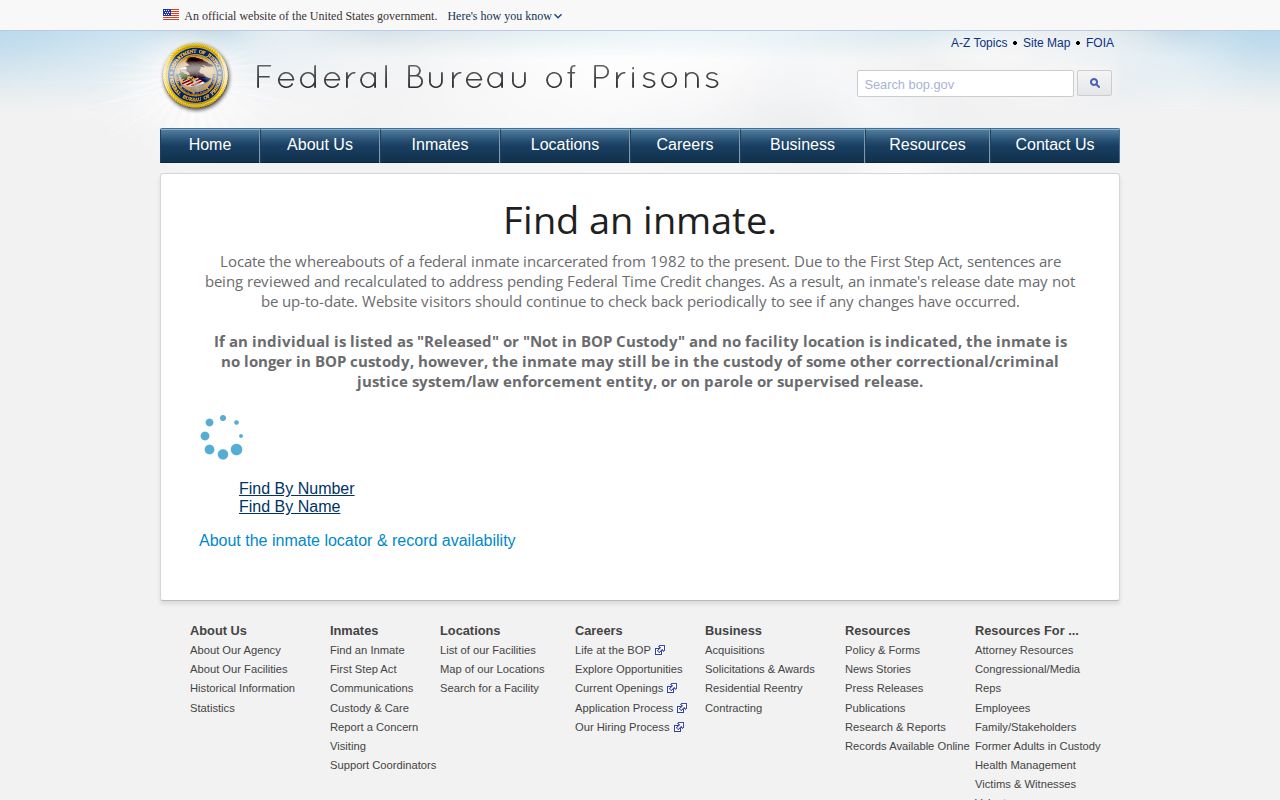
The locator is a federal status tool, not a Green County jail roster. Record what it displayed and when, then check the federal court record for legal context.
Where Federal Prisoners Go
A BOP release may be a physical return to the community, but the destination must not be assumed from the locator alone. A person can begin supervised release, move to a residential setting under federal authority, be transferred to USMS, enter a state or county hold, or move into ICE custody.
- Supervised release
- Federal court supervision after imprisonment, distinct from Kentucky parole.
- USMS custody
- Federal transport or detention connected to court proceedings; it may not appear as BOP institutional custody.
- Detainer
- Another authority’s request or basis to take or continue custody.
- Community release
- Exit from confinement without proof that every supervision duty has ended.
Green and Taylor officials can certify only their own records. If Taylor transferred a person on a federal writ or detainer, its exit transaction can document the handoff but cannot certify the later BOP discharge. Likewise, BOP status does not resolve a separate Green charge or Kentucky DOC hold.
Federal Court Release Records
The federal court docket connects the BOP status to the sentence and legal orders. Review the judgment, sentence, later amendments, and supervised-release terms. A locator date without a docket can be misread, especially when a prisoner left BOP for another proceeding or custody system.
For committed prisoners, BOP is the principal locator. The U.S. Marshals Service transports and holds federal pretrial and sentenced prisoners but does not offer a general historical released-person search. A narrowly framed USMS FOIA request is a fallback for an identifiable transport or custody record, subject to privacy and law-enforcement exemptions.
Ask for an existing record and provide a register number, case number, date range, and precise event. Broad requests are less likely to isolate the release or transfer question. If the issue is sentence completion, the federal court and BOP records should be read together.
Confirm Federal Release Custody
Build the sequence in order: federal charge, USMS custody if applicable, BOP commitment, institution changes, BOP release status, and supervised release or another transfer. Keep state and local events on parallel lines. This prevents one agency’s custody end from being treated as freedom from all agencies.
- Match the BOP record with the register number and descriptors.
- Capture the exact release wording and date.
- Check the federal docket for sentence and supervision terms.
- Search Kentucky or county systems only when a documented hold or later case points there.
- Use ICE’s locator only when records support immigration custody.
If BOP says released while another official system says in custody, compare times, identifiers, and agencies. Both can be correct if BOP relinquished the person to a state or immigration authority. Do not choose one source simply because its wording seems more favorable.
Federal Release Search Limits
The locator’s absence does not erase a federal case. Name mismatches, older records, pretrial custody, and data limits can explain it. Search the docket and use agency channels when the person cannot be matched. Preserve the exact URL and access date because public systems change.
Federal release is also separate from Kentucky VINE. VINE covers participating county jails, Kentucky prisons, and certain other state-fed records, but it is not a BOP notification service. A federal status should be verified through federal sources.
The Green County released inmate search helps classify an uncertain local, state, or federal event. Start with Taylor and the Green case for an ordinary local arrest. Move to BOP only when facts establish federal jurisdiction.
Note: A BOP release date does not prove residence in Green County, final discharge from supervision, or the absence of another agency’s custody.